



Three sentences to help you sell
Write three sentences anyone could repeat and understand: what your company does and the problem it solves, who will buy it, and why you are the best option. That distillation stress tests your commercial strategy, and it hands you the beginning, middle and end of a story that works everywhere you communicate.
The exercise exists because too many deep tech founders treat the idea or the science as the story. There is a crucial difference between an investor saying cool idea, I get it and that investor actually committing, and the difference is usually how the idea is presented. Showing the technology alone does not work. Selling the vision alone does not work either. The story has to blend the two, and increasingly it has to land with an investor who does not understand the intricate details of the science and is not going to pretend otherwise.
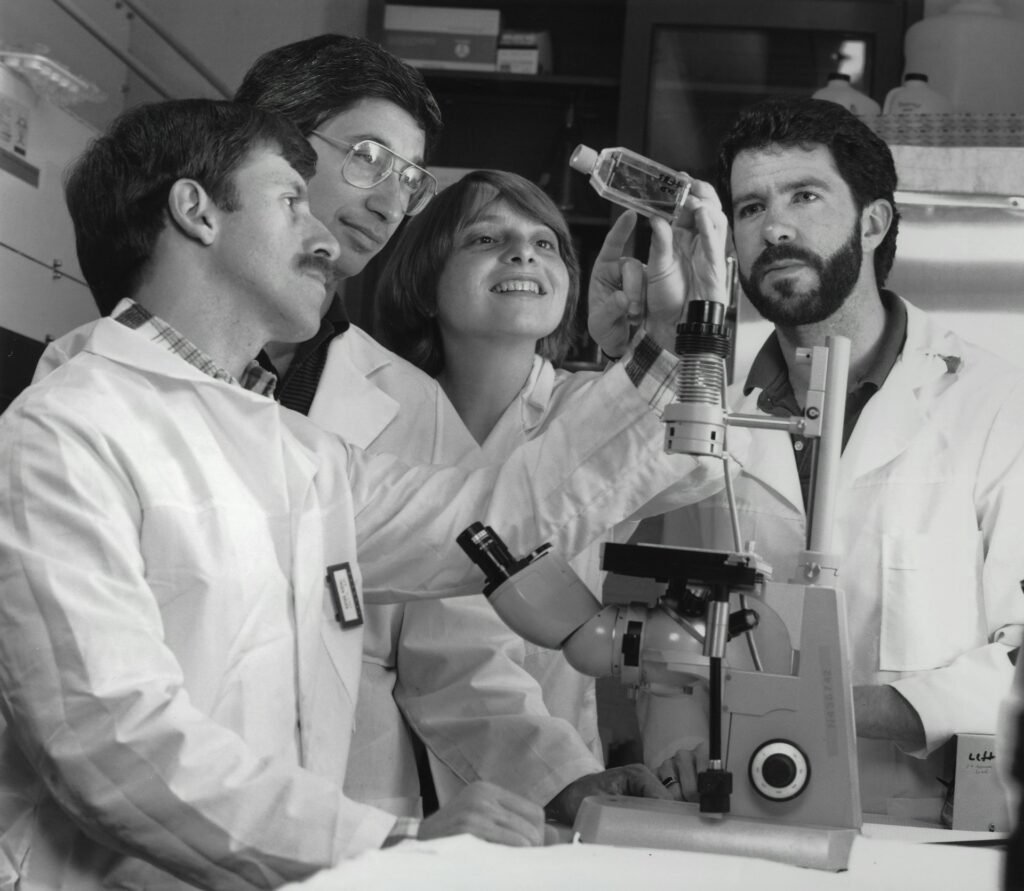
Why founders skip the story
The reasons are more honest than the marketing industry usually admits, and neither of them is carelessness.
The first is closeness. When you have spent years inside the R&D, working on the product every day, it is easy to fall into the trap of assuming knowledge on the listener’s part. The words you use around the lab feel like plain description to you, because in your building they are. You stopped hearing the jargon as jargon a long time ago, the way you stop hearing your own accent.
The second reason is that talking about science in an abstract, future-gazing way can feel disingenuous, especially to people whose whole training is facts and evidence. A founder who refuses to gush about changing the world is not bad at marketing. They are being careful with the truth, and that carefulness is exactly the instinct that made the science good. The way through is not a bigger performance. It is a story built on what is checkable now, told plainly, so the founder can say every sentence of it without wincing.
The three sentences
The exercise is short to describe and slower to do well.
Sentence one: what your company does and the problem it solves. Written so a stranger could repeat it accurately at dinner. If the sentence needs a second sentence to explain it, it is not done. The test is repetition, not elegance: your story will spend most of its life being retold by people who are not you, in meetings you are not in, and it has to survive that journey intact.
Sentence two: who will buy it. Not the market, the buyer. A named kind of company (Ideal customer Profile or ICP) and, if you can manage it, a named kind of person inside that company (Ideal buyer persona or IBP). If this sentence comes easily, the rest of your commercial story usually follows. If it does not come at all, the exercise has just told you something more valuable than any messaging: the work to do next is conversations with potential customers, not copywriting.
Sentence three: why you are the best option to solve this problem. Best against the alternatives the buyer actually weighs, which includes doing nothing at all. Doing nothing is usually the strongest competitor a deep tech company faces, and a sentence that only beats rival technologies has missed it.
Between them, the three sentences are the beginning, middle and end of your story. Problem, buyer, advantage. Every pitch, every page, every post is a longer or shorter version of the same three.
When the exercise finds a strategy problem
Here is the caveat an agency should give you before taking your money. Sometimes the exercise fails, and when it fails it is nearly always sentence two. If nobody in the company can say who will buy the technology, that is not a writing problem, and no amount of messaging work will fix it. Hiring an agency at that point buys you nicely phrased uncertainty.
The sequence is customer conversations first, messaging second. A quarter spent talking to potential buyers will fill in sentence two properly, and everything your write after that gets easier and cheaper. Some of the best value we can add in a first conversation is telling a company it is too early to work with us.
Where the three sentences work
Once they exist, the sentences stop being an exercise and start being infrastructure.
They are the opening of your website, because a visitor gives you seconds before deciding whether this is for them. They are the spine of the pitch deck, with everything else in the deck serving as evidence for one of the three. They are the brief you hand to anyone who writes, designs or films for you, which is why the same three sentences make a video sharper and cheaper to produce: a film crew with a settled story shoots in one day what an unsettled one circles for three.
They also keep you consistent, and consistency does a lot of the work here. A buyer meets your company several (maybe 10!) times before a decision, on the site, in a deck, in a colleague’s retelling, across months. When every encounter carries the same three sentences underneath, the impressions compound into familiarity. When each channel says something different, they compound into doubt.

The test at the end
Read your three sentences to someone outside your field, then ask them to tell you what your company does. If what comes back is accurate, the story is working. If what comes back is a compliment, it is not; people often praise what they do not understand to avoid admitting it.
The story you build this way will change as the company changes, and that is fine; the exercise is cheap to rerun. If you want a second pair of eyes on your three sentences, or an honest answer about whether it is too early for messaging work at all, that is what a 20 minute call is for, and our websites and messaging work is where those three sentences end up.
Frequently asked questions
What three things should a startup’s story cover?
What the company does and the problem it solves, who will buy it, and why this company is the best option to solve the problem. Written as three sentences anyone could repeat and understand, they form the beginning, middle and end of every pitch, page and post the company produces.
Why do technical founders find storytelling hard?
Two honest reasons. Closeness: after years inside the R&D, it is easy to assume knowledge the listener does not have. And integrity: talking about science in an abstract, future-gazing way can feel disingenuous to people trained on facts. The fix is a story built on what is checkable now, told plainly, rather than a bigger performance.
How do you explain a complex technology to a non-expert?
Start from what changes for the listener and let the mechanism follow only if they ask. Simplifying is choosing which true thing to say first, not saying something less true. The test is whether the listener can repeat it accurately to someone else after you have left the room.